Dispute Systems Design

Green Line Train running through a neighborhood

The Fight for Boston’s GLX and CLX: Stakeholder Mapping and Integrative Negotiation – Part II

by Justin Minion ’23  In Part I of this series, I have covered stakeholders battles that would likely be described as “distributive.”  For instance, the stakeholder battles between the Conservative Law Foundation and the Commonwealth of Massachusetts, and between the MBTA and the MassDot would likely be examined through the lens of zero-sum bargaining.  In […]

The Fight for Boston’s GLX and CLX: Stakeholder Mapping and Integrative Negotiation – Part II Read More »

Rethinking Systems Design for Racial Justice

The Harvard Negotiation & Mediation Clinical Program, in partnership with the Ohio State Journal on Dispute Resolution, The Ohio State University’s Divided Community Project, and Stanford Law School’s Gould Center for Conflict Resolution, is pleased to invite you to join an interactive symposium series titled “Rethinking Systems Design for Racial Justice & Equity.” This three part-series will take place across the spring semester and across the country.

Rethinking Systems Design for Racial Justice Read More »

HNMCP and the American Bar Association Jointly Release Report on Best Practices for Eviction Diversion: “Designing for Housing Stability”

A major new report jointly released today by the Harvard Negotiation and Mediation Clinical Program and the American Bar Association identifies a list of key considerations for designing court-based and court-adjacent eviction prevention and/or diversion programs. The report, Designing for Housing Stability: Best Practices for Court-Based and Court-Adjacent Eviction Prevention and/or Diversion Programs, was written

HNMCP and the American Bar Association Jointly Release Report on Best Practices for Eviction Diversion: “Designing for Housing Stability” Read More »

Dispute Systems Design Info Session for HLS Students

This information session brought together current Dispute Systems Design Clinic students—to talk about the skills they’ve harvested from working with real-world clients through the clinic—as well as alums, who reflect on how their clinic experience helped them discern and inform their professional path and work in the world. This info session was held for Harvard

Dispute Systems Design Info Session for HLS Students Read More »

When Norms Collide, Part 2 – Rights, Interests, and Power: Why Inter-Bubble Conflicts are so Hard to Resolve

by Patrick Maxwell ’21   This post is the second installment of a multi-part blog series by Patrick Maxwell, “When Norms Collide:  The (Growing?) Challenge of Inter-bubble Conflicts.”  The series will explore conflicts that cut across structures, groups, and worldviews—and what it may take to effectively navigate them. Read Part 1 here.   In the previous entry in this series, we

When Norms Collide, Part 2 – Rights, Interests, and Power: Why Inter-Bubble Conflicts are so Hard to Resolve Read More »

Harvard Negotiation & Mediation Clinical Program Releases Report on a New Safety Response System for the City of Boston

The Boston Police Department routinely responds to calls for service involving mental health, homelessness, substance use, traffic incidents, and nonviolent neighborhood or domestic disputes. In the face of nationwide racial disparities in public safety practices, many have advocated for the ability to seek help in addressing these issues without relying entirely on the police. In June

Harvard Negotiation & Mediation Clinical Program Releases Report on a New Safety Response System for the City of Boston Read More »

When Norms Collide: Part 1—What is an “inter-bubble” conflict?

By Patrick Maxwell ‘21    This post is the first installment of a multi-part blog series by Patrick Maxwell, “When Norms Collide:  The (Growing?) Challenge of Inter-bubble Conflicts.”  The series will explore conflicts that cut across structures, groups, and worldviews—and what it may take to effectively navigate them.    Sandra, Alex, and QAnon Although Sandra and Alex had been friends for years, their relationship

When Norms Collide: Part 1—What is an “inter-bubble” conflict? Read More »

Truth Commissions as an Antidote to Unrest: Where Dialogue and Transparency Promote Reconciliation

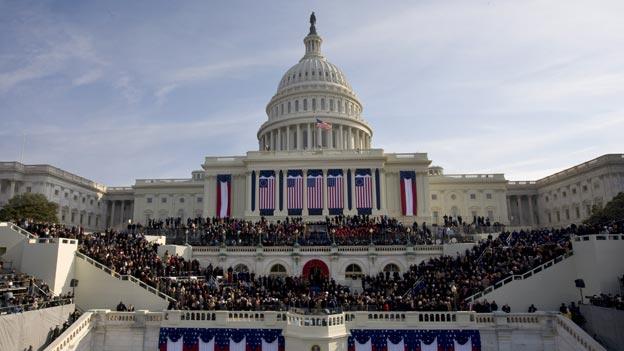
by Oladeji Tiamiyu ’20   In recent months, America has experienced significant social upheaval, ranging from the nation-wide protests in the aftermath of the killing of George Floyd to the attempted insurrection of the Capitol that led to the deaths of 5 individuals. In July 2020, Boston, San Francisco, and Philadelphia established truth commissions in

Truth Commissions as an Antidote to Unrest: Where Dialogue and Transparency Promote Reconciliation Read More »

The Risk—and Relief—in Calls for Unity

President Biden ran on a campaign of unity, “restoring the soul of our nation.” These calls often resembled a pastor’s sermon more than policymaker’s plan, and suggested that division was not a symptom, but instead a harm in and of itself. . . . In President Biden’s view, it seems that division itself is what needs to be overcome. But how? Does his vision of unity include those who stormed the Capitol, or the lawmakers who refuse to denounce them? How do we achieve unity when the current moment also requires an unambiguous rejection of forms of violence? Is his unity a moral aspiration, or a political project? If it is the latter, how do we implement it?

The Risk—and Relief—in Calls for Unity Read More »

Can Dispute Systems Design be “Rapid-Response”?

Dispute systems design, when done well, emphasizes thoughtful, intentional engagement with stakeholders in order to develop robust conflict management systems. Is this approach useful during an acute crisis? A few days ago, a friend who works in a state court system sent the following email to me and a number of colleagues in the field of

Can Dispute Systems Design be “Rapid-Response”? Read More »

Scroll to Top