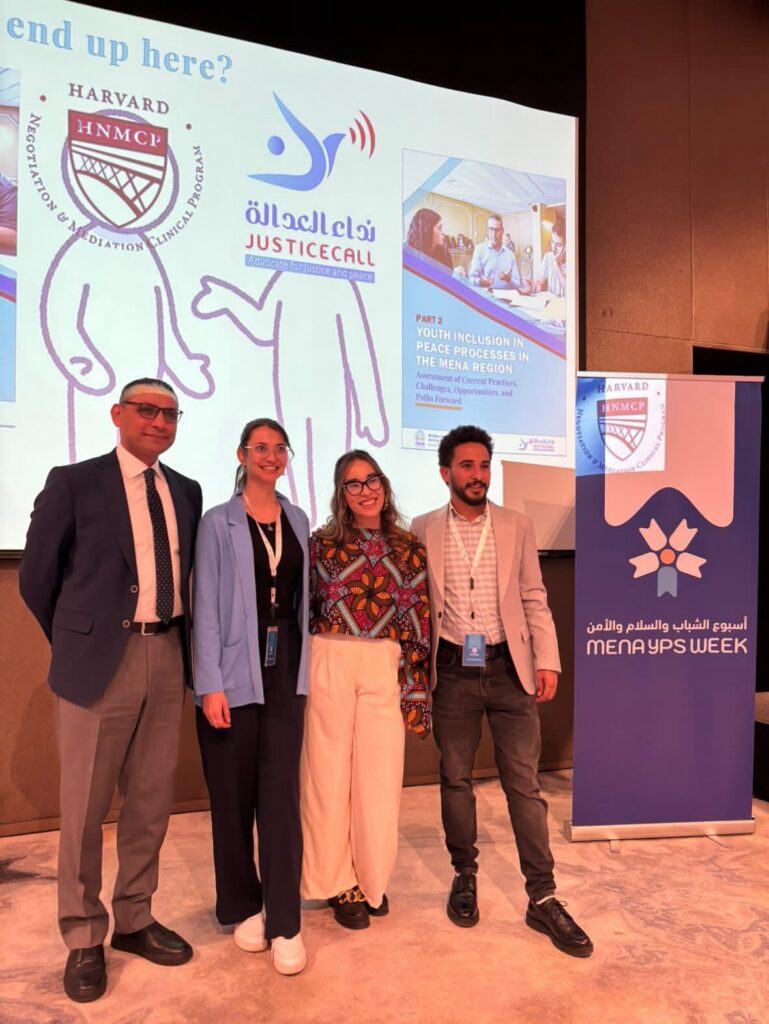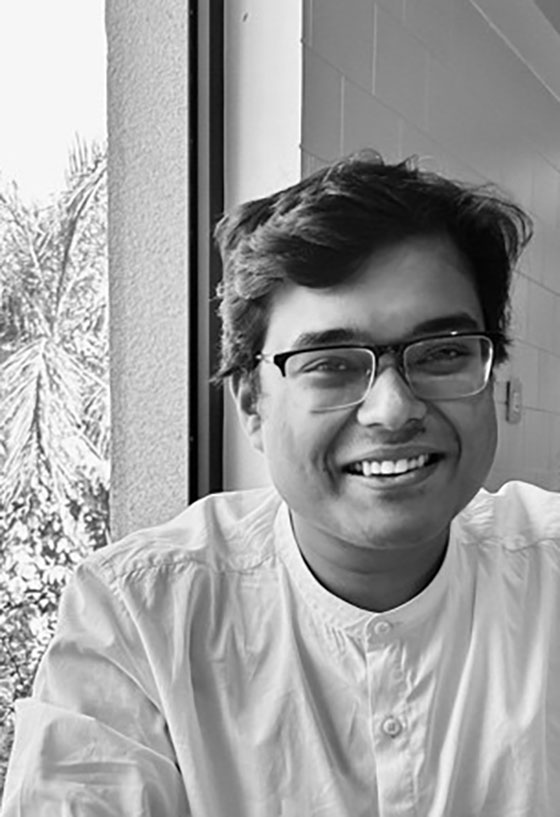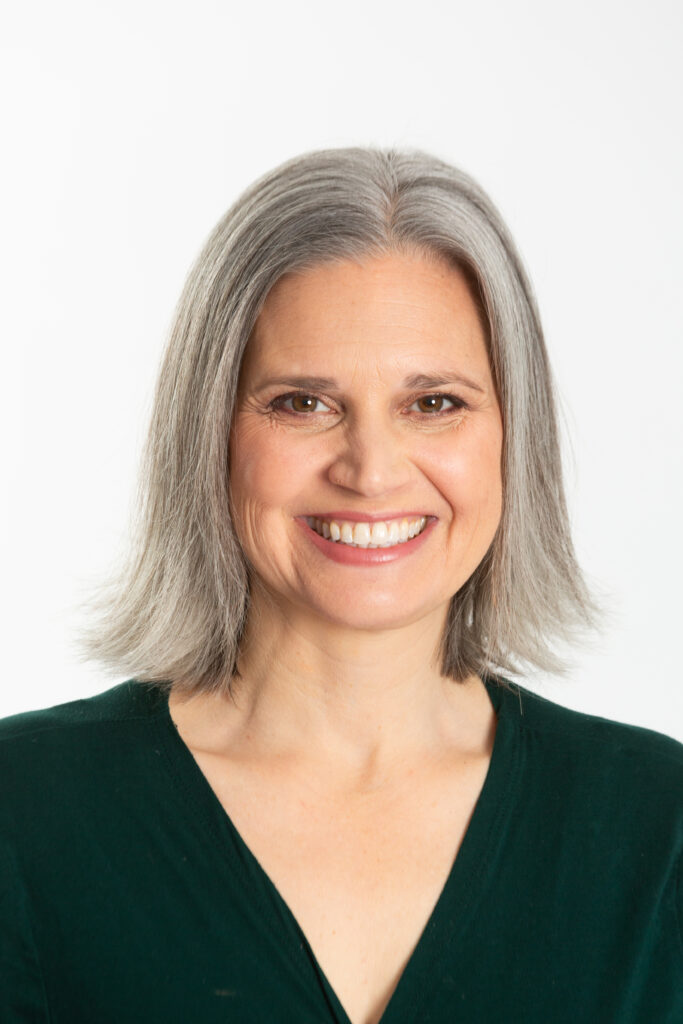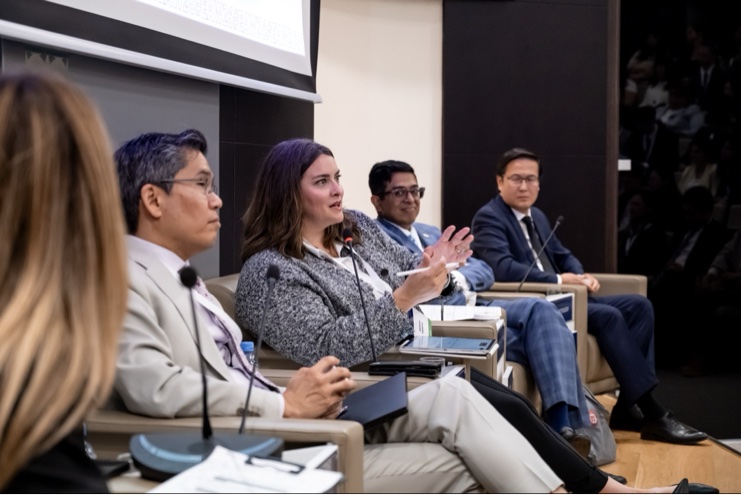
Picture: From l to r: Hiro Aragaki (UC Law San Francisco); Deanna Pantín Parrish (Harvard Law School); Kabir Duggal (Columbia University); Dr. Mukhiy Yeleuov (Partner, ADL Disputes).
While many Americans were celebrating the United States’ 250th anniversary with barbeques and fireworks, I was a world away in Astana, Kazakhstan, at the International Arbitration Centre’s 4th annual IAC Eurasia Arbitration Week conference—invited there because of my experience in conflict resolution, including my work at Harvard Law School’s Dispute Systems Design Clinic.
The International Arbitration Centre (IAC) is an independent arbitral body founded in 2018 as part of the Astana International Financial Centre (AIFC). The IAC walks a tightrope forged by its geography. Kazakhstan bridges Asia and Europe along the Silk Road, sharing land borders with Russia, China, Kyrgyzstan, Uzbekistan, and Turkmenistan. It is the largest landlocked country in the world, and the 9th largest overall, and yet most people I told about my trip responded with some version of “wait…where exactly is that?”
Kazakhstan is both definitively Central Asian and also home to more than 130 ethnic groups. This diversity shows up in language, religion, history, and commercial practices. It also means that dispute resolution is not a niche specialty but a daily necessity in a complex, multi-layered society—one that is deeply international, yet often overlooked in U.S. and Eurocentric conversations about arbitration and mediation.
The IAC operates under the principles of English common law, with English as the language of proceedings, but it is firmly rooted in its regional context. Since 2022, Kazakhstan has become an increasingly important venue for enforcing Russian-related judgments and arbitral awards, as Russian entities can no longer seek enforcement in many European jurisdictions. That shift has elevated the IAC’s profile and underscored the practical importance of neutral, credible forums for cross-border disputes.
Each year, IAC Eurasia Arbitration Week brings together dispute resolution experts and practitioners from across the world to wrestle with the field’s most pressing questions: how to make arbitration more procedurally efficient; how to handle cross-border disputes that span multiple legal traditions; how shifting geopolitics are reshaping legal developments along the Middle Corridor and the broader Silk Road region; how artificial intelligence should (and should not) be used in case management and decision-making; and what the future of arbitration and mediation practice looks like for the next generation of lawyers.
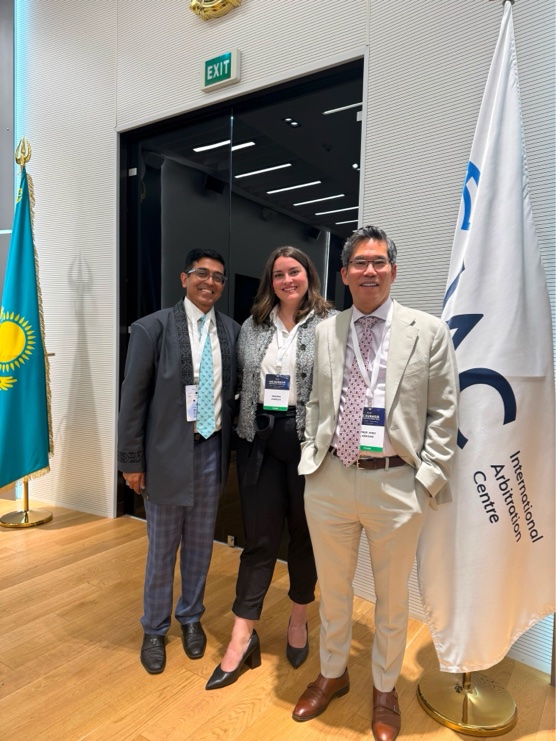
Picture: from l to r – Kabir Duggal (Columbia University); Deanna Pantín Parrish (Harvard Law School); Hiro Aragaki (UC Law San Francisco).
This year, I was invited to engage with that “next generation.” I had the privilege of speaking with young arbitrators and mediators from across Central Asia about the challenges and opportunities of entering the profession at this moment in time—when demand for dispute resolution is rising, but traditional pathways into the field can feel opaque and exclusive. We discussed not only careers in arbitration and mediation, but also the field of dispute systems design: how institutions, courts, companies, and even governments can intentionally design their conflict-handling processes and systems to be more fair, accessible, and effective, even in a time of tremendous technological change.
Those questions were also front and center in another highlight of my week: collaborating with Hiro Aragaki of UC Law San Francisco and Kabir Duggal of Columbia University to advise the deans of several Central Asian law schools on how to build and grow ADR courses and clinical offerings at their home institutions. The conversations were practical—curriculum design, case management, partnerships with courts and bar associations—but also deeply contextual. What, for example, does it mean to teach “interest-based negotiation” in a legal culture that has been strongly shaped by Soviet-era formalism? How can law schools prepare students for careers in international arbitration while also honoring and preserving local traditions of conflict resolution? How can law schools help develop students’ working English proficiency—the working language of international arbitration in the region—if local clinical work takes place in local languages?
I found myself employing a mediator’s favorite refrain—“say more”—and a lawyer’s favorite phrase—“it depends.” That’s because above all else, my time in Astana was an opportunity to listen and learn. Central Asia sits at the nexus of Asia and Europe, of ancient trade routes and new geopolitical dynamics. The region’s growing dispute resolution landscape reflects that complexity: a blend of formal and informal systems, local and international norms, legacy institutions and emerging centers like the IAC. For an American educator and practitioner, it was a humbling reminder that my own ways of thinking about conflict—where it arises, why it escalates, how it should be resolved—are only one small part of a much larger, global conversation.
We encourage this same systemic awareness in our clinical students at Harvard Law School’s Dispute Systems Design Clinic (DSDC). Through hands-on support from instructors and a robust co-curricular classroom experience, DSDC students are trained to look beyond individual cases and ask systemic questions: Who gets access to what kind of process? Whose voices are heard, and whose are left out? How do we design dispute resolution systems that reflect local culture and context, rather than simply importing models from elsewhere?
As the Harvard Negotiation & Mediation Clinical Program and the Dispute Systems Design Clinic continue to support students and clients working around the world, experiences like IAC Eurasia Arbitration Week help to ground our teaching and clinical projects in that broader context. They push us to ask how dispute resolution can be responsive not only to doctrine and efficiency, but also to culture, history, and human experience—even, and perhaps especially, in places some of us have to look up on a map.