
A Year of Pandemic Mediation—Online Lessons Learned at the Harvard Mediation Program
By Peter Daniels ʼ21 As the world has adjusted to restrictions caused by the COVID-19 pandemic, the Harvard Mediation Program (HMP) has changed along with it. Boston-area courts have shifted to remote hearings for many case types, pushing mediation to be remote as well. HMP has been in the fortunate position to help lead…
Adapting to the Virtual World: Teaching Negotiation to High School Students Online
By Kate Strickland ’23, Colin Mark ’22, Lorea Mendiguren ’23, and Anselmo Cassiano In a year that forced the world online, a team from the student practice organization Harvard Law School Negotiators worked throughout the year to transform an existing project to teach high school students the principles of negotiation and active listening into a virtual learning format. For multiple years, the HLS Negotiators has had a recurring relationship…

Student Spotlight: Patrick Maxwell ʼ21
Patrick Maxwell is a dual-degree candidate for his JD at Harvard Law School and his MA in Law and Diplomacy at The Fletcher School at Tufts University. We first met Patrick as a client in the spring of 2016 when we did a project in the Democratic Republic of Congo with the Mennonite Central Committee. Two-and-a-half years later, we welcomed Patrick as…

Tying it All Together: Creating Purpose-Built Infrastructures to Address Inter-bubble Conflicts
By Patrick Maxwell ‘21 To wrap up this blog series, let’s think back to the first entry of this series, and the concept of “conflict resolution infrastructure” that was introduced there. Conflict resolution infrastructure is the set of processes, decision rules, specialists, and sources of truth that govern how a conflict is managed—and as…
When Norms Collide, Part 5: Essential Partners’ approach to inter-bubble conflict
By Patrick Maxwell For this blog entry, I sat down with Nadiya Brock. Nadiya is an Associate at Essential Partners—a Cambridge-based organization that equips people to live and work better together in community by building trust and understanding across differences. The communities that Nadiya and Essential Partners work with often find themselves embroiled in inter-bubble conflicts. Nadiya and I…

When Norms Collide, Part 4: Interpersonal and National Inter-Bubble Conflicts—Two Stories
By Patrick Maxwell ‘21 The next entries of this blog series will focus on examples of inter-bubble conflicts from real life—and how those conflicts came to some kind of successful resolution. In this post, we’ll examine two vignettes of inter-bubble conflict. The first example is an interpersonal conflict, returning to the world of QAnon and conspiracy theories that we first referenced…

Dispute Systems Design Info Session for HLS Students
This information session brought together current Dispute Systems Design Clinic students—to talk about the skills they’ve harvested from working with real-world clients through the clinic—as well as alums, who reflect on how their clinic experience helped them discern and inform their professional path and work in the world. This info session was held for Harvard…

What Makes a Negotiation Win-Win? Exploring Perspectives, Mutability, and the Limits of Value Creation – Part 2
By Zekariah McNeal ‘21 The precursor to this post began a discussion for why negotiations are understood to be win-win or win-lose. Analyzing how the pre-agreement and post-agreement perspectives of a negotiator relate to this question, the previous post suggested that determining whether a negotiation is win-win is quite a complex endeavor. Although the…
When Norms Collide, Part 3: How Inter-Bubble Conflicts Become Politicized and Polarized—And What This Means for ADR
By Patrick Maxwell ‘21 Many of the most salient examples of inter-bubble conflicts—in a US context, at least—take the form of “culture war” issues. The opening entry in this blog series referenced an interpersonal conflict stemming from the QAnon phenomenon, and hot-button issues like abortion or climate change certainly qualify as inter-bubble conflicts. The question then arises: are inter-bubble conflicts inherently “political”? And…

When Norms Collide, Part 2 – Rights, Interests, and Power: Why Inter-Bubble Conflicts are so Hard to Resolve
by Patrick Maxwell ’21 This post is the second installment of a multi-part blog series by Patrick Maxwell, “When Norms Collide: The (Growing?) Challenge of Inter-bubble Conflicts.” The series will explore conflicts that cut across structures, groups, and worldviews—and what it may take to effectively navigate them. Read Part 1 here. In the previous entry in this series, we…
Harvard Negotiation & Mediation Clinical Program Releases Report on a New Safety Response System for the City of Boston
The Boston Police Department routinely responds to calls for service involving mental health, homelessness, substance use, traffic incidents, and nonviolent neighborhood or domestic disputes. In the face of nationwide racial disparities in public safety practices, many have advocated for the ability to seek help in addressing these issues without relying entirely on the police. In June…

What Makes a Negotiation Win-Win? Exploring Perspectives, Mutability, and the Limits of Value Creation – Part 1
by Zekariah McNeal ’21 Consider this slightly altered version of a well-known example from Getting to Yes.1 Two children are fighting over an orange, when their mother discovers them and demands that they stop. “Why do you want the orange?” she asks them both. “To make orange juice!” answers the first child. “To make a cake with the orange…

When Norms Collide: Part 1—What is an “inter-bubble” conflict?
By Patrick Maxwell ‘21 This post is the first installment of a multi-part blog series by Patrick Maxwell, “When Norms Collide: The (Growing?) Challenge of Inter-bubble Conflicts.” The series will explore conflicts that cut across structures, groups, and worldviews—and what it may take to effectively navigate them. Sandra, Alex, and QAnon Although Sandra and Alex had been friends for years, their relationship…
Book Review: America’s Peacemakers: The Community Relations Service and Civil Rights
Clinical Instructor Deanna Parrish ’16 reviews America’s Peacemakers: The Community Relations Service and Civil Rights by Bertram Levine and Grande Lum, calling it both “personal—and tragically relevant.” “. . . . CRS works behind the scenes to provide free, impartial, and confidential conciliation and mediation services to communities, with the intention of “keeping the peace”…
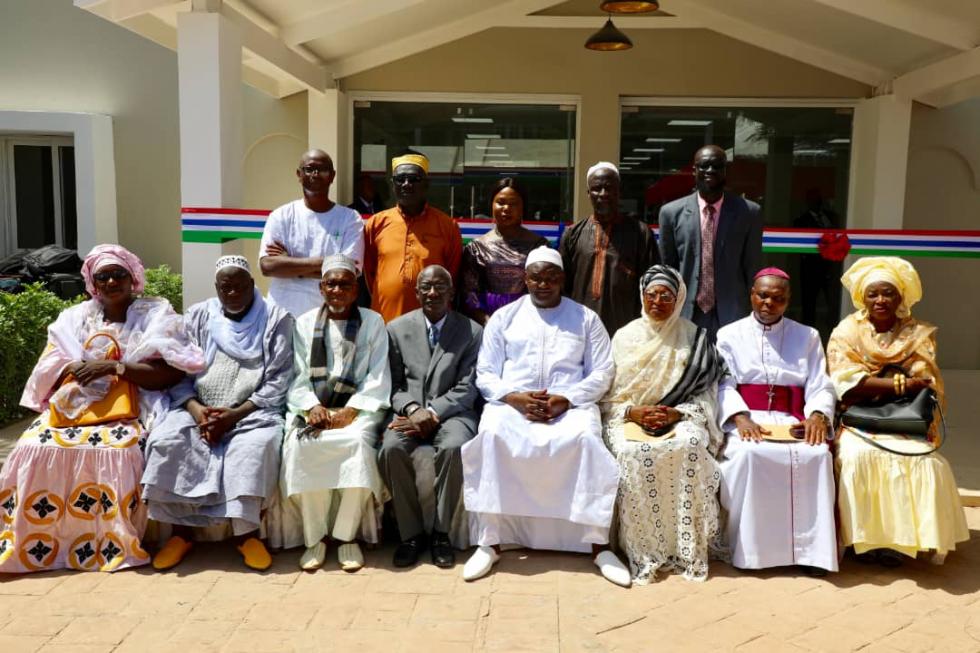
Truth Commissions as an Antidote to Unrest: Where Dialogue and Transparency Promote Reconciliation
by Oladeji Tiamiyu ’20 In recent months, America has experienced significant social upheaval, ranging from the nation-wide protests in the aftermath of the killing of George Floyd to the attempted insurrection of the Capitol that led to the deaths of 5 individuals. In July 2020, Boston, San Francisco, and Philadelphia established truth commissions in…

Identity Commitments at the Negotiating Table
by Zekariah McNeal ’21 Identity often affects the substance of negotiations, not just the process. But this influence might be the most likely to remain unspoken. Consider an employee who enters her employer’s office to ask for a raise. That employee might prepare for such a negotiation by gathering objective criteria such as comparable salaries, market trends,…